The Federal Department of Home Affairs (FDHA),recently held a «Round Table on Cost Reduction» involving several months of talks with a select group of stakeholders. The aim was to identify potential additional savings in the Swiss healthcare system. Despite submitting requests to participate, Swiss Medtech was not invited to attend. «The association was only consulted briefly, and seemingly as an afterthought. That is not how true inclusion works,» says Swiss Medtech Managing Director Adrian Hunn, sharply criticising the process.
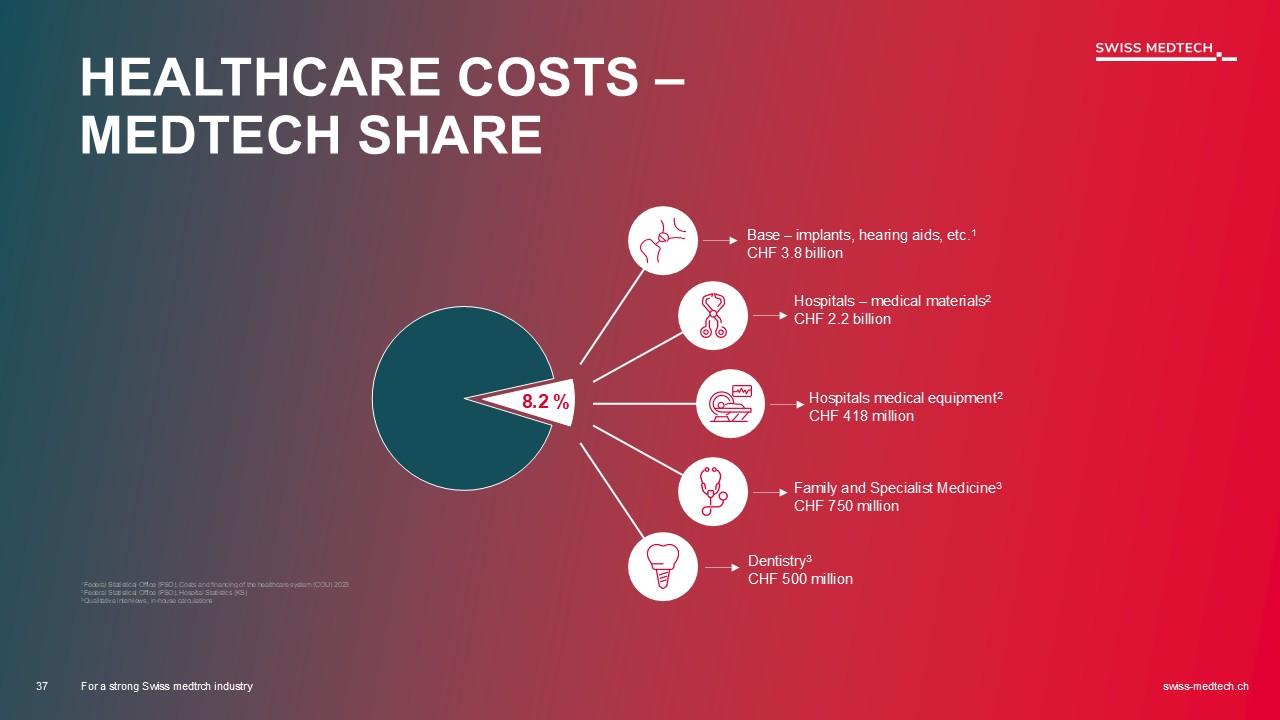
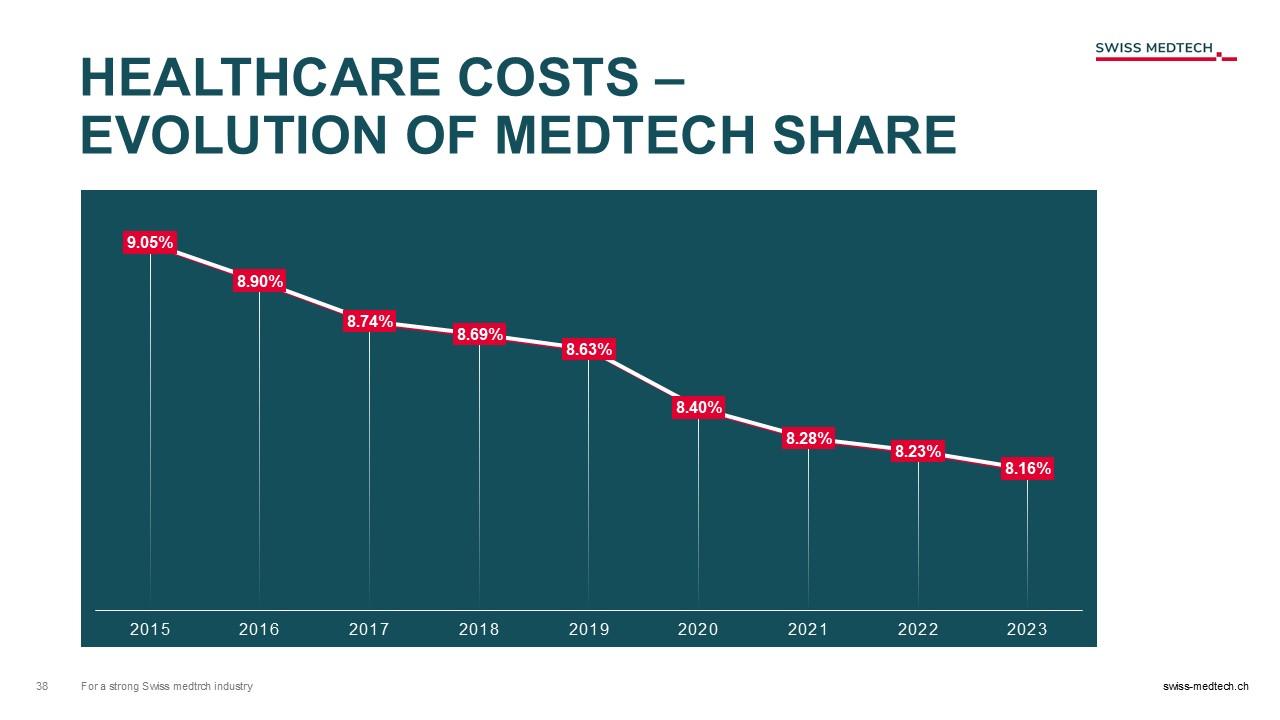
As a result, the medtech industry’s perspective was largely ignored. And yet, this dynamic sector, with all its innovations and gains in efficiency, has contributed significantly to the country’s sustainably financed medical system for years. Its share of total healthcare expenditure is only 8.2 % – and has been declining for years. The portion financed by compulsory health insurance is even lower.
Maximum limit reached – patient care suffering
The Swiss population expects wide-reaching and rapid access to innovative, high-quality medical devices, as is opposed to restrictions in supply. This standard, however, can no longer be guaranteed: the shortage of medical devices in hospitals and doctors’ practices has already reached alarming levels. Further cost-cutting measures not only threaten the competitiveness of medtech companies, but also the safety of patients.
Some steps meant to increase savings are also in direct contradiction to each other. One example is the shift towards outpatient care – in itself correct, and important. Swiss Medtech has always supported the uniform financing of outpatient and inpatient services (EFAS) to strengthen integrated treatment and provide quality care at reasonable costs. However, the planned introduction of outpatient flat rates in early 2026 jeopardises these goals. Instead of promoting the shift to outpatient care, it will produce the opposite effect. Outpatient tariffs are too low – in both absolute and relative terms. Implant costs and other services have also been added. «Many outpatient treatments are no longer cost-effective. Outdated surgical methods will experience a comeback. Instead of modern osteosynthesis plates for fractures, old-fashioned plaster casts and wires will make a return,» says Adrian Hunn.
Savings to the List of Medical Supplies and Devices (MiGeL) are also planned. Instead of actively pursuing a long-overdue complete revision, individual measures are being singled out, driven by sensationalist media coverage. Here, too, the «big picture» is being ignored.
Switzerland needs health policies that promote innovation, create security for planning, and ensure fair access to modern technologies in order to continue benefiting from a strong medtech industry in the future. This is the only way to ensure long-term supply of high-quality medical devices to the population.
With over 70,000 employees, the medtech industry is a key contributor to the Swiss economy and plays a central role in stabilising the healthcare system. Its innovative strength not only boosts the economy, but also improves patients’ quality of life on a daily basis. «To ensure that this remains, we need framework conditions that equally consider quality, safety, and cost-effectiveness – instead of jeopardising care through short-sighted cost-cutting measures,» says Adrian Hunn.
Swiss Medtech represents around 800 members in its role as industry association for Swiss medical technology. With 71,700 employees and a contribution of 11.9% to the positive trade balance, medical technology is an economically significant sector in Switzerland. Swiss Medtech advocates for conditions that enable the medtech industry to perform at peak capacity and provide first-class medical care.